Task
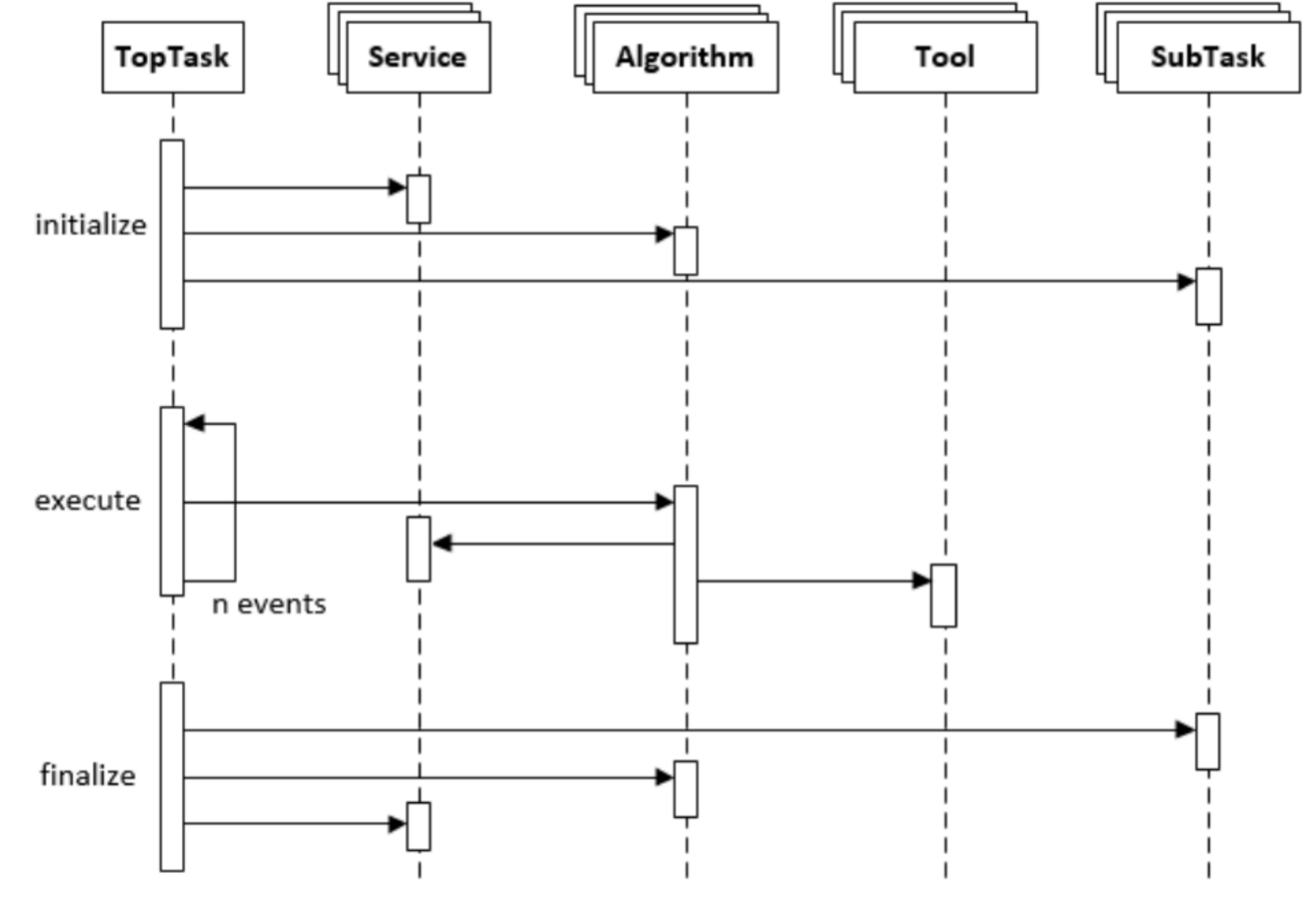
The most core component of SNiPER is Task, which controls the running process of SNiPER. SNiPER’s unique multi-Task flow management mechanism supports flexible data processing flows. As shown in the figure below, developers can configure one or more Tasks in each SNiPER job, and independently configure algorithms and services within each Task. Under this design, each Task can manage a separate data input and output stream, enabling complex data processing flows such as background mixing and multi-stream data analysis. As shown in the following figure, during job execution, developers can use the Incident mechanism to freely trigger the operation of sub-Tasks based on their needs, thereby achieving dynamic data processing flows (e.g., invoking different reconstruction and analysis processes based on different types of physical events).
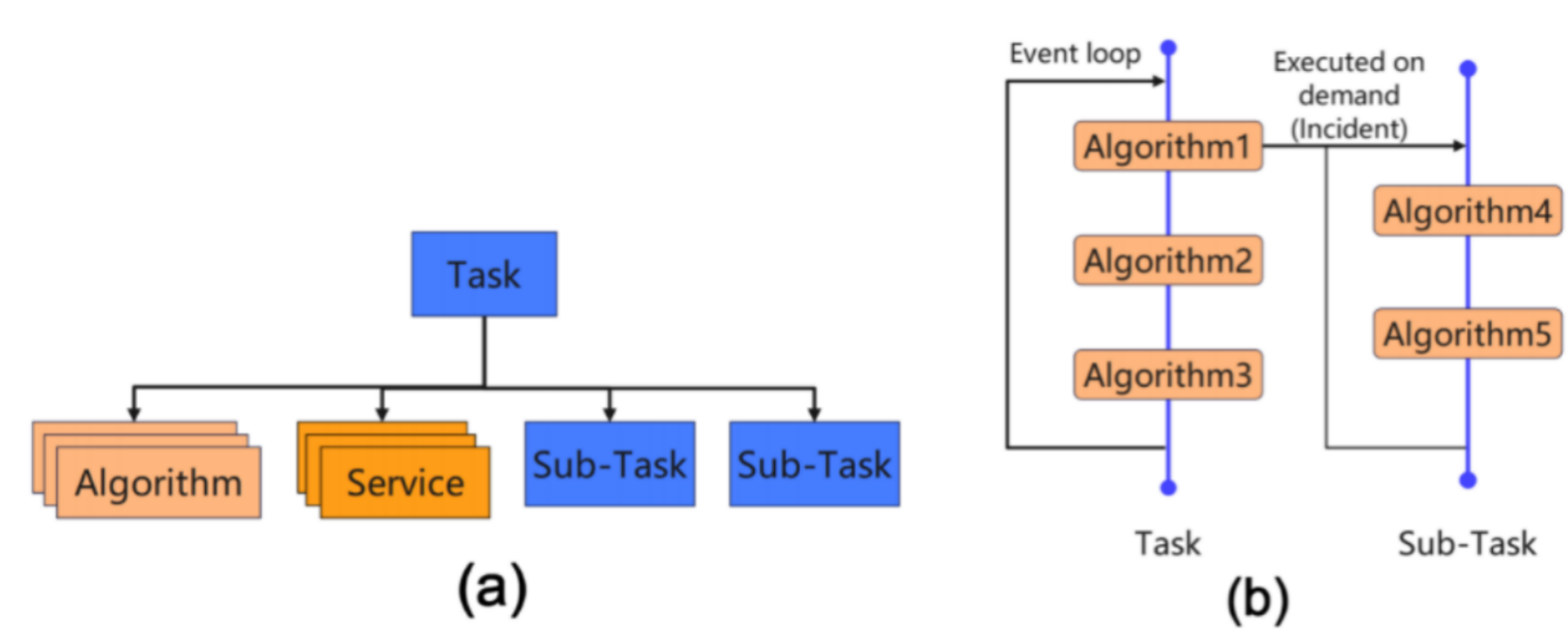
In the HERD experiment, the majority of the data processing process follows the flow: 1) After the job starts, global initialization is performed, completing actions such as detector geometry construction, database connection, and data file opening; 2) Before and after processing each event, event-level initialization and cleanup work is performed, such as data input and output; 3) After all events are processed, global cleanup work is performed, such as writing job metadata, closing data files, disconnecting database connections, and cleaning up memory. As shown in the figure below, SNiPER achieves this flow by defining the runtime sequence of Tasks: When a Task initializes, its managed services, algorithms, and sub-Tasks are initialized in turn by calling their initialize() functions; when a Task ends, the finalize() functions of its sub-Tasks, algorithms, and services are called in reverse order to complete the cleanup work; during the execution of each event, the execute() function of its managed algorithms is called to run the specific algorithm code. Under this sequence control, application developers only need to embed the corresponding code into the initialize(), execute(), and finalize() functions of the algorithm or service to implement various data processing programs based on SNiPER’s flow control.